On this page
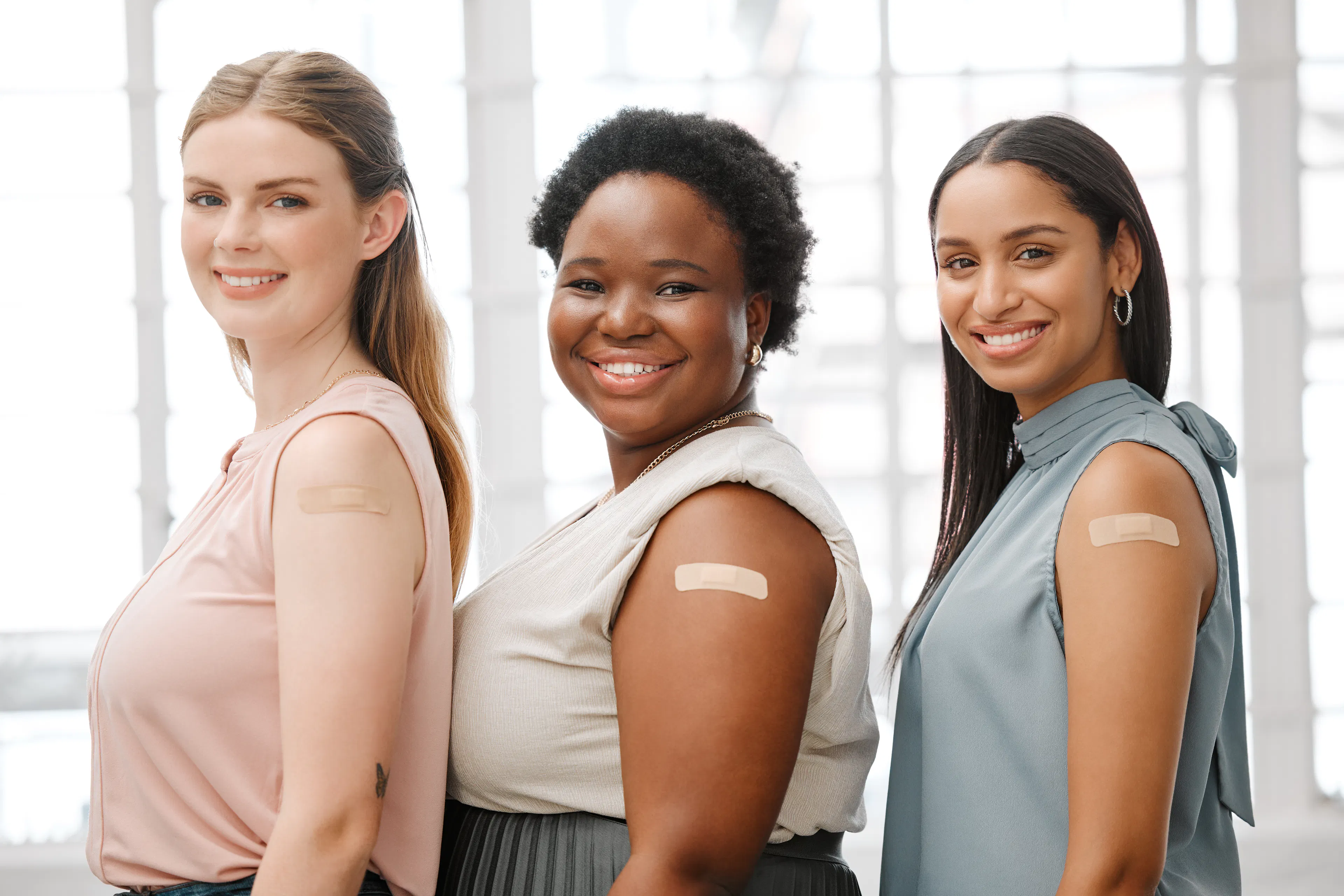
Vaccination is a very effective way to protect yourself and your community from some sexually transmitted infections (STIs).
There are 5 vaccinations available. This information explains:
- Which STIs a vaccination can protect against
- How each vaccination is given (how many injections are needed and how often)
- Who can get the vaccination (who gains the most benefit)
- How to access each vaccination
Hepatitis B Vaccination
What it does
This protects against hepatitis B, a virus passed on through blood and body fluids. The virus can lead to chronic liver disease and liver cancer.
Vaccine schedule
A course of 3 or 4 injections over a 6 to 12 month period. Booster doses may be needed later in some people. Blood tests can help check if you have enough protection from the vaccination. (Children in the UK routinely receive a hepatitis B vaccine course from 2 months of age up to 18 months of age).
Who can get the hepatitis B vaccine
The following groups are recommended to get vaccinated:
- Gay, bisexual and other men that have sex with men
- People who work in the sex industry
- People who inject drugs or smoke heroin/crack cocaine
- People from, or with sexual partners from, countries where hepatitis B is common
- People living with HIV
- Close contacts or sexual partners of people living with the hepatitis B virus
- Healthcare workers or after an occupational exposure
- Prisoners
- People with chronic liver disease or chronic kidney disease
- People requesting PEP or PrEP
- People who have recently been sexually assaulted
- Infants as part of the childhood vaccination programme
The following groups may also be considered for vaccination:
- People with multiple sexual partners
- People seeking treatment for an STI
Where to get the hepatitis B vaccine
GP surgeries (children and adults), sexual health clinics (adults) and occupational health departments (healthcare workers).
Hepatitis A Vaccination
What it does
This protects against the hepatitis A virus, which causes a liver infection. It is usually passed on through contaminated food or water or close contact with someone who has hepatitis A.
Vaccine schedule
Usually given as 2 injections. The first injection provides short-term protection, followed by a booster 6 to 12 months later for long-term protection (up to 25 years).
Who can get the hepatitis A vaccine
- Gay, bisexual and other men that have sex with men
- Trans women who have sex with men
- People with chronic liver disease (including hepatitis B and C)
- People who inject drugs
- People living with HIV
- Travellers to certain areas (such as Sub-Saharan Africa, parts of Asia, South America)
Where to get the hepatitis A vaccine
Some GP surgeries, sexual health clinics or private travel clinics.
Human Papillomavirus (HPV) Vaccination
What it does
This protects against infection from various types of HPV. This includes the types of HPV that cause most cervical cancers, as well as some anal, genital, head and neck cancers. It also includes the types of HPV that cause most genital warts.
Vaccine schedule
- Under 25s: 1 injection
- Aged 25 to 45: 2 injections
- People with suppressed immunity (immunocompromised): 3 injections
Who can get the HPV vaccine
In London and the rest of England, the following groups are recommended to get vaccinated:
- All young people at school from Year 8 (ages 12 to 13)
- Gay, bisexual and other men that have sex with men, and are aged up to 45
- Anyone who missed getting vaccinated in school can get a “catch up” vaccine before the age of 25
The following groups may also be considered for vaccination:
- Transgender people up to the age of 45
- Individuals working in the sex industry
- People living with HIV
Where to get the HPV vaccine
School immunisation programmes, GP surgeries and sexual health clinics.
mpox (previously known as Monkeypox) Vaccination
What it does
This uses a modified smallpox vaccine to protect against the mpox virus. Mpox causes fever, swollen glands, and a painful blistering rash.
Vaccine schedule
Usually 2 injections are given at least 28 days apart for maximum protection.
Who can get the mpox vaccine
- Gay, bisexual, and other men who have sex with men who:
- Have group sex
- Had recent sex with multiple partners
- Attend sex-on-premises venues
- Have had an STI in the last 12 months - Healthcare workers at high risk of exposure.
- Close contacts of confirmed cases (post-exposure prophylaxis).
Where to get the mpox vaccine
Sexual health clinics. It is not generally available through GP surgeries.
4CMeningococcal B (4CMenB) Vaccination
What it does
This vaccine provides a 30 to 40% reduction against getting gonorrhoea. It provides protection for at least 4 years after vaccination.
Vaccine schedule
2 injections typically 4 weeks apart. The second injection can also be given 3, 6 or 12 months later.
Who can get the 4CMenB vaccine
- Gay, bisexual, and other men who have sex with men who:
- Have had a STI in the last 12 months
- Have had 5 or more sexual partners in the last 3 months - People of other genders who have a higher chance of getting gonorrhoea, for example individuals working in the sex industry
- Infants, as part of the childhood vaccination programme
Where to get the 4CMenB vaccine
Sexual health clinics. GP surgeries as part of the routine childhood vaccination schedule.
Links for more information
- Hepatitis B - NHS
- Hepatitis B vaccine - NHS
- Draft guideline: Viral Hepatitis Guidelines | BASHH
- HPV vaccine - NHS
- JCVI statement on mpox vaccination as a routine programme - GOV.UK
- 4CMenB vaccine for prevention of gonorrhoea: information for healthcare practitioners - GOV.UK