On this page
What is FGM?
FGM (female genital mutilation) refers to procedures that involve partial or complete removal of a girl or woman’s external genitals or other kinds of injury to the female genitals for non-medical reasons. It is also referred to as circumcision or cutting.
FGM is carried out for various cultural, religious and social reasons within families and communities but:
- is illegal in the UK
- is a form of child abuse
- has no health benefits.
In fact, it is very painful and causes serious short- and long-term problems around sex, periods, urinating and childbirth.
Who is affected by FGM?
It is carried out on young girls, up to the age of 15 (often before puberty has started).
It is especially common in parts of Africa, the Middle East and Asia, with high rates in countries such as Somalia, Guinea, Djibouti, Egypt, Sudan, Mali, Sierra Leone, Eritrea, Ethiopia, Kenya, and Nigeria. It also affects communities worldwide through migration.
Everyone has the right to control what happens to their bodies and the right to say no to FGM.
If you have had FGM or you're worried that you or someone you know is at risk of having it done please contact a support organisations (see below). Alternatively please contact the SHL team on 020 3315 4515.
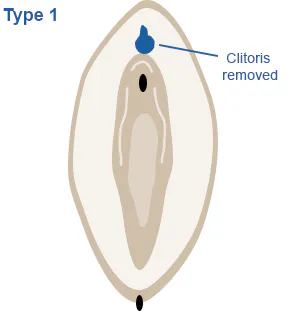
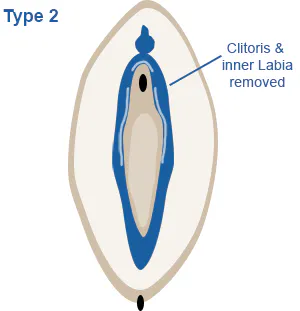
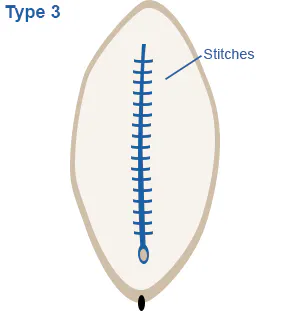
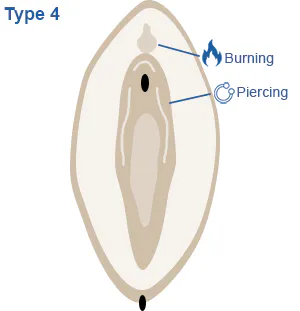
What FGM appears like
Type 1 – Clitoridectomy
Type 2 – Excision
Type 3 – Infibulation
Type 4 – Other
Health problems caused by FGM
FGM can lead to physical and emotional harm, including:
- Severe pain and excessive bleeding at the time of the procedure
- Infections
- Difficulties / problems with urination
- Difficulties / problems with periods
- Scar tissue and cysts
- Painful sex / sexual health difficulties
- Problems during childbirth and increased maternal or newborn risk
- Psychological effects such as anxiety, depression, and post-traumatic stress.
Support around FGM
Support and treatment is available following FGM.
The NHS runs National FGM Support Clinics across London. They offer a range of services including:
- sensitive physical assessment
- emotional support
- counselling
- information
- referral to specialist treatment if needed.
These clinics are free for people eligible for NHS care and are designed to be safe, confidential spaces.
You can self-refer or ask your GP, midwife, or healthcare provider to help you access them.